Wirtschaft
Die letzten Jahre haben gezeigt, dass technologischer Fortschritt und Effizienzgewinne allein nicht ausreichen, um unseren Ressourcen- und Energieverbrauch und die dadurch verursachten Umweltprobleme entscheidend zu reduzieren. Die relativen Einsparungen von Ressourcen durch Effizienzsteigerungen werden oft langfristig durch die absoluten Steigerungen von Produktions- und Konsummengen aufgehoben und überkompensiert. Eine nachhaltige Wirtschaftspolitik darf daher nicht bei der Förderung von Effizienzsteigerungen – so wichtig diese auch sind – enden.
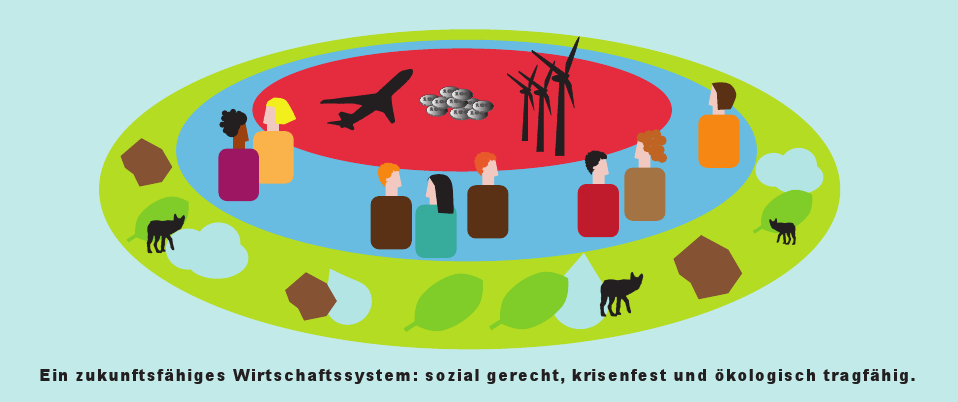
Wir verstehen eine nachhaltige Wirtschafts- und Sozialpolitik als die Summe aller ökonomischen und ökologischen Politikmaßnahmen, die eine Dematerialisierung hoch industrialisierter Volkswirtschaften zum Ziel haben, ohne negativ auf sozio-ökonomische Zielsetzungen (wie z.B. die Steigerung der Beschäftigung und der Lebensqualität) zu wirken. Wichtige politische Maßnahmen, die die Weichen für einen nachhaltigen Umbau unseres Wirtschaftssystems stellen, sind beispielsweise eine ökosoziale Fiskalreform, handelbare Zertifikate für Ressourcen und Emissionen und die Umverteilung von Arbeit und Einkommen. Ein entscheidender Punkt für die erfolgreiche Umsetzung liegt im abgestimmten Zusammenspiel aller Maßnahmen.
Im Kern geht es um die Frage, wie das Wirtschaftssystem umgestaltet werden kann, um unseren Energie- und Ressourcenverbrauchs zu reduzieren ohne die Lebensqualität zu verringern. Um geeignete Antworten auf diese Frage zu finden, entwickeln wir zukunftsfähige wirtschafts- und sozialpolitische Konzepte, bieten lösungsorientierte und ganzheitliche Beratungsleistungen an und zeigen alternative Wege für Wirtschafts- und Lebensweisen auf, die die Bedürfnisse der Menschen auf innovative und umfassende Weise und mit geringerem Ressourcenverbrauch befriedigen. Mit unserer Arbeit wollen wir politische EntscheidungsträgerInnen bei der Suche nach nachhaltigen Problemlösungen in ihren jeweiligen Bereichen unterstützen.
![[date]](/wp-includes/images/smilies/date.png) News
News " class="wp-smiley" /> Blog
![[paper]](/wp-includes/images/smilies/report.png) Publikationen
Publikationen![[person]](/wp-includes/images/smilies/user.png) MitarbeiterInnen
MitarbeiterInnen![[projects]](/wp-includes/images/smilies/bricks.png) Projekte
Projekte![[people]](/wp-includes/images/smilies/group.png) Partner
Partner